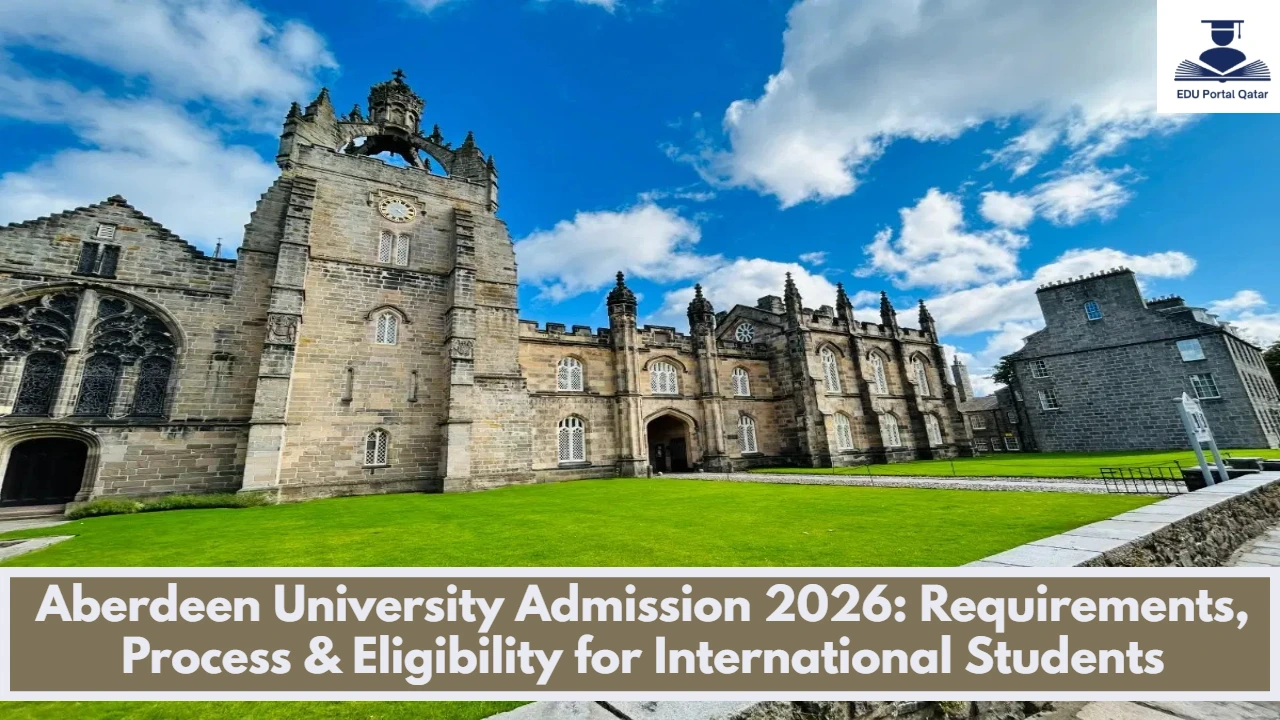
Getting admission to University of Aberdeen is a dream for many students who want a globally recognized degree, strong career opportunities, and a high-quality student experience in the UK. Known for academic excellence, research innovation, and an international student-friendly environment, the university attracts applicants from across the world every year.
If you are planning to study in the UK in 2026, understanding the Aberdeen University Admission process is extremely important. From eligibility requirements and GPA expectations to application deadlines and document submission, this detailed guide covers everything international students need to know.
Whether you are applying for undergraduate, postgraduate, engineering, business, medicine, or research programs, this article will help you navigate the entire admission journey successfully.
Overview of Aberdeen University Admission Process
The admission process at the University of Aberdeen is straightforward but competitive for certain courses. International students must carefully follow the university guidelines and submit accurate documents before deadlines.
The general admission process includes:
- Choosing a course
- Checking eligibility requirements
- Preparing academic documents
- Meeting English language requirements
- Applying online
- Paying application-related fees (if applicable)
- Receiving offer letters
- Accepting admission offers
- Applying for a UK student visa
The university offers admissions for:
- Undergraduate programs
- Postgraduate taught courses
- Postgraduate research programs
- Online degree programs
- Foundation and pathway courses
Students from India, Qatar, UAE, Pakistan, Bangladesh, Nepal, and other countries frequently apply for admission every year.
Aberdeen University Admission Requirements for International Students
International applicants must meet both academic and English language requirements for successful admission.
Academic Requirements
Requirements vary depending on the course level.
Undergraduate Admission Requirements
Students applying for bachelor’s programs usually need:
- High school qualification equivalent to UK standards
- Strong academic performance
- Subject-specific requirements for technical programs
- English proficiency test scores
Popular accepted qualifications include:
- CBSE
- ISC
- State Boards
- International Baccalaureate (IB)
- A-Levels
Postgraduate Admission Requirements
For master’s degree admission, applicants generally need:
- A recognized bachelor’s degree
- Good GPA or percentage
- Relevant academic background
- Supporting documents
- English language proficiency
Competitive courses such as law, medicine, data science, business analytics, and engineering may require stronger academic profiles.
Aberdeen University Admission for Indian Students 2026
Indian students form one of the largest international student communities at the University of Aberdeen. The university accepts qualifications from most Indian education boards.
Eligibility for Indian Students
Undergraduate Applicants
Indian students usually need:
- 70%–85% marks in Class 12
- Strong scores in relevant subjects
- English proficiency scores
Postgraduate Applicants
For master’s programs, students generally require:
- A bachelor’s degree from a recognized university
- Minimum 55%–70% marks depending on the course
- Relevant academic specialization
English Language Requirements
Indian students may need one of the following tests:
- IELTS
- TOEFL iBT
- PTE Academic
- Duolingo English Test (for selected programs)
Typical IELTS requirements:
- Undergraduate: 6.0–6.5
- Postgraduate: 6.5–7.0
Some programs may ask for higher band scores.
Minimum GPA & Eligibility Criteria for Aberdeen University
The University of Aberdeen evaluates applicants holistically, but academic performance remains a major factor.
Minimum GPA Requirements
Typical GPA expectations include:
| Program Type | Recommended GPA |
|---|---|
| Undergraduate | Equivalent of 70%+ |
| Postgraduate Taught | 2.7–3.3 GPA |
| MBA Programs | Higher academic profile preferred |
| Research Degrees | Strong academic and research background |
Meeting minimum requirements does not guarantee admission because some programs are highly competitive.
Additional Eligibility Criteria
Some courses may also require:
- Portfolio submissions
- Work experience
- Research proposal
- Interviews
- Entrance assessments
- Statement of purpose
Programs in medicine, health sciences, architecture, and business management often have additional evaluation criteria.
Documents Required for Aberdeen University Admission
Submitting complete and accurate documents significantly improves your admission chances.
Mandatory Documents
For Undergraduate Admission
Students generally need:
- Academic transcripts
- Class 10 and 12 certificates
- Passport copy
- English language test scores
- Personal statement
- Reference letters
For Postgraduate Admission
Applicants usually submit:
- Bachelor’s degree certificate
- University transcripts
- Resume/CV
- Statement of purpose (SOP)
- Letters of recommendation
- Passport copy
- English proficiency scores
Additional Documents for Some Programs
Certain courses may require:
- Portfolio
- Research proposal
- Work experience certificates
- Internship proof
- Financial documents
- Professional licenses
Always check program-specific requirements before applying.
How to Apply to Aberdeen University (Step-by-Step Guide)
Understanding the application process can make admission easier and faster.
Step 1: Choose Your Course
Research programs carefully and compare:
- Tuition fees
- Career opportunities
- Course duration
- Scholarships
- Internship opportunities
Select a course that aligns with your academic and career goals.
Step 2: Check Eligibility
Review:
- Academic qualifications
- Subject requirements
- GPA expectations
- English language criteria
Do not apply without meeting minimum eligibility standards.
Step 3: Prepare Documents
Keep digital copies of all required documents ready in PDF format.
Double-check:
- Name spelling
- Passport details
- Academic marks
- Upload quality
Incomplete documents often delay application processing.
Step 4: Submit Online Application
International students can apply directly through the university portal for most postgraduate programs.
Undergraduate applicants may apply through the UK’s centralized application system.
Fill in:
- Personal information
- Academic history
- Course details
- Supporting documents
Carefully review all information before submission.
Step 5: Wait for Admission Decision
Processing times vary depending on:
- Program competitiveness
- Application season
- Document verification
- International application volume
Students may receive:
- Conditional offer
- Unconditional offer
- Rejection
- Request for additional information
Step 6: Accept Offer Letter
If selected, confirm your admission offer within the deadline.
Students may also need to:
- Pay tuition deposit
- Confirm accommodation
- Upload financial documents
Step 7: Apply for UK Student Visa
After receiving the Confirmation of Acceptance for Studies (CAS), students can apply for a UK student visa.
Required documents generally include:
- CAS letter
- Passport
- Financial proof
- Tuberculosis test (if applicable)
- Visa application documents
Apply early to avoid delays.
Aberdeen University Application Deadline 2026
Deadlines vary depending on the intake and course type.
Undergraduate Application Deadlines
Most undergraduate applications follow UCAS deadlines.
Typical timelines include:
| Intake | Approximate Deadline |
|---|---|
| Main Intake | January 2026 |
| Late Applications | June 2026 |
| Clearing | July–September 2026 |
Postgraduate Application Deadlines
Postgraduate programs usually have rolling admissions, but international students should apply early.
Recommended timeline:
| Intake | Suggested Application Period |
|---|---|
| September Intake | October 2025 – May 2026 |
| January Intake | June 2026 – October 2026 |
Applying early increases scholarship and visa success chances.
Common Reasons for Aberdeen University Admission Rejection
Many students fail to secure admission due to avoidable mistakes.
1. Low Academic Performance
Weak GPA or poor subject marks can reduce admission chances, especially for competitive programs.
2. Incomplete Documentation
Missing transcripts, recommendation letters, or passport copies may lead to rejection or delays.
3. Weak Statement of Purpose
A poorly written SOP that lacks clarity, goals, or originality can negatively impact your application.
4. Low English Test Scores
Failing to meet IELTS or TOEFL requirements is a common reason for rejection.
5. Applying Late
Late applications may miss available seats, scholarships, or visa timelines.
6. Irrelevant Academic Background
Some specialized courses require prior subject knowledge or experience.
Tips to Increase Admission Chances at Aberdeen University
Competition for international admissions continues to increase every year. These practical tips can improve your chances significantly.
Maintain Strong Academic Scores
Focus on:
- Higher GPA
- Subject-specific performance
- Consistent academic records
Strong academics remain the most important admission factor.
Write an Excellent SOP
Your statement of purpose should clearly explain:
- Career goals
- Academic interests
- Why you chose Aberdeen
- Future ambitions
- Relevant experiences
Avoid copying templates from the internet.
Apply Early
Early applications help with:
- Faster processing
- Scholarship opportunities
- Better accommodation choices
- Reduced visa stress
Improve English Scores
Aim for scores above the minimum requirement whenever possible.
Higher IELTS or TOEFL scores strengthen your profile.
Include Strong Recommendation Letters
Recommendations from professors or employers should highlight:
- Academic abilities
- Leadership
- Communication skills
- Research potential
Gain Relevant Experience
Internships, projects, volunteer work, and certifications improve your application quality.
Popular Courses at Aberdeen University for International Students
The university is known for several globally respected programs.
Popular choices include:
- Petroleum Engineering
- Data Science
- Business Management
- Artificial Intelligence
- Law
- Public Health
- Finance
- Medicine
- Psychology
- International Relations
Students often choose Aberdeen because of strong employability and research opportunities.
Scholarships for International Students
The Aberdeen University offers several scholarships to international students based on academic merit and eligibility.
Common Scholarship Types
- Merit scholarships
- International undergraduate scholarships
- Postgraduate tuition discounts
- Country-specific awards
- Research funding
Scholarships can reduce tuition costs significantly.
Students should apply early because funding is limited.
Student Life at Aberdeen University
International students enjoy a welcoming environment and vibrant campus culture.
Benefits of Studying at Aberdeen
- Globally recognized degree
- Modern campus facilities
- Safe student environment
- Excellent research opportunities
- International student support
- Career services
- Cultural diversity
Students can also participate in:
- Sports clubs
- Student societies
- Networking events
- Research communities
- Internship programs
Cost of Studying at Aberdeen University
Tuition fees vary depending on the program.
Estimated Annual Tuition Fees
| Program | Approximate Fees |
|---|---|
| Undergraduate | £18,000–£25,000 |
| Postgraduate | £20,000–£35,000 |
| MBA & Specialized Programs | Higher fees may apply |
Living Expenses
Students should budget for:
- Accommodation
- Food
- Transport
- Insurance
- Study materials
- Personal expenses
Average annual living costs may range between £10,000 and £15,000.
Career Opportunities After Graduation
Graduates from the University of Aberdeen benefit from strong global recognition.
Popular employment sectors include:
- Engineering
- Technology
- Finance
- Energy
- Healthcare
- Research
- International business
The university’s career services help students with:
- Resume building
- Interview preparation
- Job fairs
- Internship placements
- Employer networking
Why Choose Aberdeen University in 2026?
Students choose the University of Aberdeen because of:
- High global rankings
- Excellent research reputation
- Affordable compared to many UK universities
- Strong international student support
- Industry-focused education
- Modern learning facilities
- High graduate employability
Its long academic history and modern teaching approach make it one of the preferred UK destinations for international students.
FAQs About Aberdeen University Admission
1. Is Aberdeen University good for international students?
Yes, the University of Aberdeen is considered one of the best UK universities for international students because of its academic quality, global recognition, and supportive environment.
2. What GPA is required for Aberdeen University admission?
The required GPA depends on the program, but most postgraduate courses expect the equivalent of a 2.7–3.3 GPA or strong academic percentages.
3. Can Indian students apply directly to Aberdeen University?
Yes, Indian students can apply directly for many postgraduate programs. Undergraduate applications may require submission through the UK application system.
4. Does Aberdeen University require IELTS?
Yes, most programs require proof of English proficiency through IELTS, TOEFL, PTE, or equivalent accepted tests.
5. What is the acceptance rate of Aberdeen University?
The university has a moderately competitive admission process, but acceptance varies by course and applicant quality.
6. When should I apply for Aberdeen University admission 2026?
International students should ideally apply 6–10 months before the intake to improve admission and visa success chances.
7. Does Aberdeen University offer scholarships?
Yes, the university offers multiple merit-based and international student scholarships for undergraduate and postgraduate students.
8. How long does the admission process take?
Processing time varies, but many applications receive decisions within a few weeks after complete document submission.

Hi, I’m Aysha Khan — an education researcher based in Qatar, dedicated to helping students and parents choose the right schools, universities, and career paths. With over 5 years of experience in education consultancy and academic research, I provide authentic, data-driven insights to make your educational journey easier and stress-free.