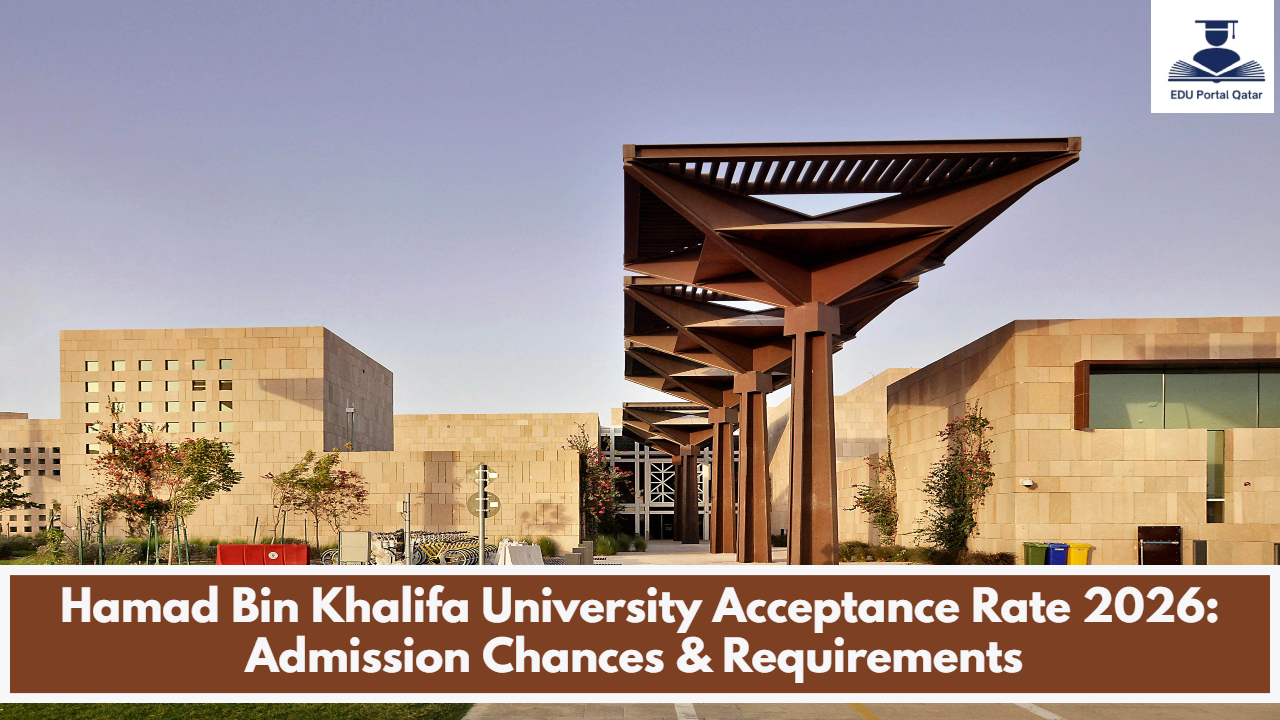
If you’re planning to pursue higher education in Qatar, understanding the Hamad Bin Khalifa University Acceptance Rate 2026 is essential. Many international students want to know how competitive admission is and what it takes to secure a place at one of the region’s top research universities.
Located in Doha, Hamad Bin Khalifa University (HBKU) is known for its strong focus on research, innovation, and interdisciplinary education. With a growing global reputation and limited program seats, admission can be competitive—especially for top programs.
In this detailed guide, we’ll break down the Hamad Bin Khalifa University Acceptance Rate, course-wise trends, GPA requirements, and proven strategies to improve your admission chances.
Current Acceptance Rate (Estimated)
Unlike many global universities, Hamad Bin Khalifa University does not officially publish its acceptance rate. However, based on application trends and available insights:
Estimated Acceptance Rate:
20% – 35% (varies by program and intake)
What This Means:
- Admission is moderately to highly competitive
- Limited seats in specialized programs
- Strong emphasis on academic and research profile
Programs with scholarships and funding tend to have lower acceptance rates due to higher demand.
Admission Competitiveness
The Hamad Bin Khalifa University Acceptance Rate 2026 depends heavily on the program you choose.
Highly Competitive Programs:
- Data Science & Artificial Intelligence
- Cybersecurity
- Public Policy
- Genomics & Biomedical Sciences
Moderately Competitive Programs:
- Islamic Studies
- Law Programs
- Some interdisciplinary research programs
Key Insight:
HBKU focuses on quality over quantity, meaning fewer seats but stronger academic standards.
GPA Required for Selection
Your academic performance is one of the most important factors in admission.
Minimum GPA Requirements:
- Master’s Programs: 3.0 (on a 4.0 scale or equivalent)
- PhD Programs: 3.2+
Competitive GPA Targets:
- Top Programs: 3.5+ preferred
- Research-based programs may require higher academic consistency
Important Note:
Meeting the minimum GPA does not guarantee admission. A strong overall profile is essential for success in the Hamad Bin Khalifa University Acceptance Rate competition.
Acceptance Rate by Course
Acceptance rates vary significantly depending on the course.
Data Science & AI:
- Acceptance Rate: ~15% – 25%
- High demand globally
Cybersecurity:
- Acceptance Rate: ~20% – 30%
- Competitive due to industry demand
Public Policy:
- Acceptance Rate: ~25% – 35%
- Requires strong academic background
Islamic Studies:
- Acceptance Rate: ~30% – 45%
- Moderate competition
Law Programs:
- Acceptance Rate: ~25% – 40%
Key Takeaway:
Choosing a less competitive program can increase your chances of admission.
Factors Affecting Admission
Several factors influence your selection in the Hamad Bin Khalifa University Acceptance Rate 2026 process.
1. Academic Performance
Your GPA and academic consistency play a major role.
2. English Proficiency
Strong IELTS/TOEFL scores are required.
3. Research Experience
Important for postgraduate and PhD programs.
4. Statement of Purpose (SOP)
Your SOP should clearly explain your goals and motivation.
5. Letters of Recommendation
Strong references can strengthen your application.
6. Program Demand
Popular programs have fewer seats and higher competition.
7. Interview Performance
Some programs require interviews.
How to Increase Chances
Getting into Hamad Bin Khalifa University requires a strategic approach.
1. Maintain a High GPA
Aim for above-average academic performance.
2. Build Research Experience
Work on projects, internships, or publications.
3. Write a Strong SOP
Clearly explain your academic goals and career plans.
4. Score High in IELTS/TOEFL
A higher score improves your profile.
5. Apply Early
Early applications have better chances.
6. Get Strong Recommendations
Choose referees who know your academic work well.
7. Prepare for Interviews
Be confident and clear about your goals.
Comparison with Other Universities
To better understand the Hamad Bin Khalifa University Acceptance Rate, here’s how it compares globally:
HBKU:
- Acceptance Rate: 20% – 35%
- Moderate to high competition
Top US Universities:
- Acceptance Rate: 5% – 15%
- Extremely competitive
UK Universities:
- Acceptance Rate: 40% – 70%
- Varies widely
Other Gulf Universities:
- Acceptance Rate: 30% – 60%
Conclusion:
Hamad Bin Khalifa University is more selective than many regional universities but less competitive than elite global institutions.
Why Students Choose HBKU Despite Competition
Despite the competitive Hamad Bin Khalifa University Acceptance Rate, students apply due to:
- Generous scholarships and funding
- Research-focused education
- Global collaborations
- Modern campus in Doha
- Career opportunities in Qatar
Career Opportunities After Admission
Graduating from Hamad Bin Khalifa University opens doors to high-demand careers.
Top Sectors:
- Research & Development
- IT & Technology
- Energy & Sustainability
- Government & Policy
- Finance & Consulting
Popular Job Roles:
- Data Scientist
- Cybersecurity Analyst
- Policy Advisor
- Research Scientist
- Consultant
Common Mistakes to Avoid
- Applying with low GPA
- Submitting incomplete applications
- Weak Statement of Purpose
- Ignoring English proficiency requirements
- Applying late
Avoiding these mistakes can significantly improve your chances.
FAQs About Hamad Bin Khalifa University Acceptance Rate 2026
1. What is the acceptance rate of HBKU?
It is estimated to be between 20% and 35%.
2. Is HBKU hard to get into?
Yes, it is moderately to highly competitive, especially for research programs.
3. What GPA is required for admission?
A minimum GPA of 3.0 is required, but higher scores improve chances.
4. Which course is most competitive?
Data Science, AI, and Cybersecurity programs are highly competitive.
5. Can international students get admission easily?
Yes, if they meet requirements and submit a strong application.
6. Does IELTS affect acceptance chances?
Yes, a higher IELTS score improves your profile.
7. Is HBKU more competitive than other Gulf universities?
Yes, it is generally more selective than many regional universities.
8. Can I get admission with average marks?
Chances are lower; strong academic performance is recommended.
9. Are interviews required?
Some programs include interviews.
10. How can I improve my chances?
Focus on GPA, research experience, SOP, and early application.

Hi, I’m Aysha Khan — an education researcher based in Qatar, dedicated to helping students and parents choose the right schools, universities, and career paths. With over 5 years of experience in education consultancy and academic research, I provide authentic, data-driven insights to make your educational journey easier and stress-free.